The quick answer
An insert window keeps the existing window frame. Before choosing that lower-disruption approach, establish that the retained frame and sill are sound and that water and air leakage are addressed. Full-frame replacement exposes the opening for assessment, repairs, flashing, insulation, and sealing. Compare both scopes before deciding what represents good value for your home.
An old sill leak became a costly Bedford repair
At a home in Bedford, Massachusetts, an older window sill was allowing water into the wall without the problem being recognized. Tyler Tranni describes the result as a very costly repair. The project photographs below show the damage exposed beneath the upper window and the wall opened for work.
The first photo shows deteriorated horizontal wood below the upper opening. The repair work extended across the window wall, with openings exposed and replacement framing visible in the later photographs. This was a much larger undertaking than changing the visible parts of a window.
Tyler’s concern for homeowners is the part of the purchase that can be easy to overlook: the condition of the old frame and the wall around it. That is where the discussion about long-term cost needs to begin.
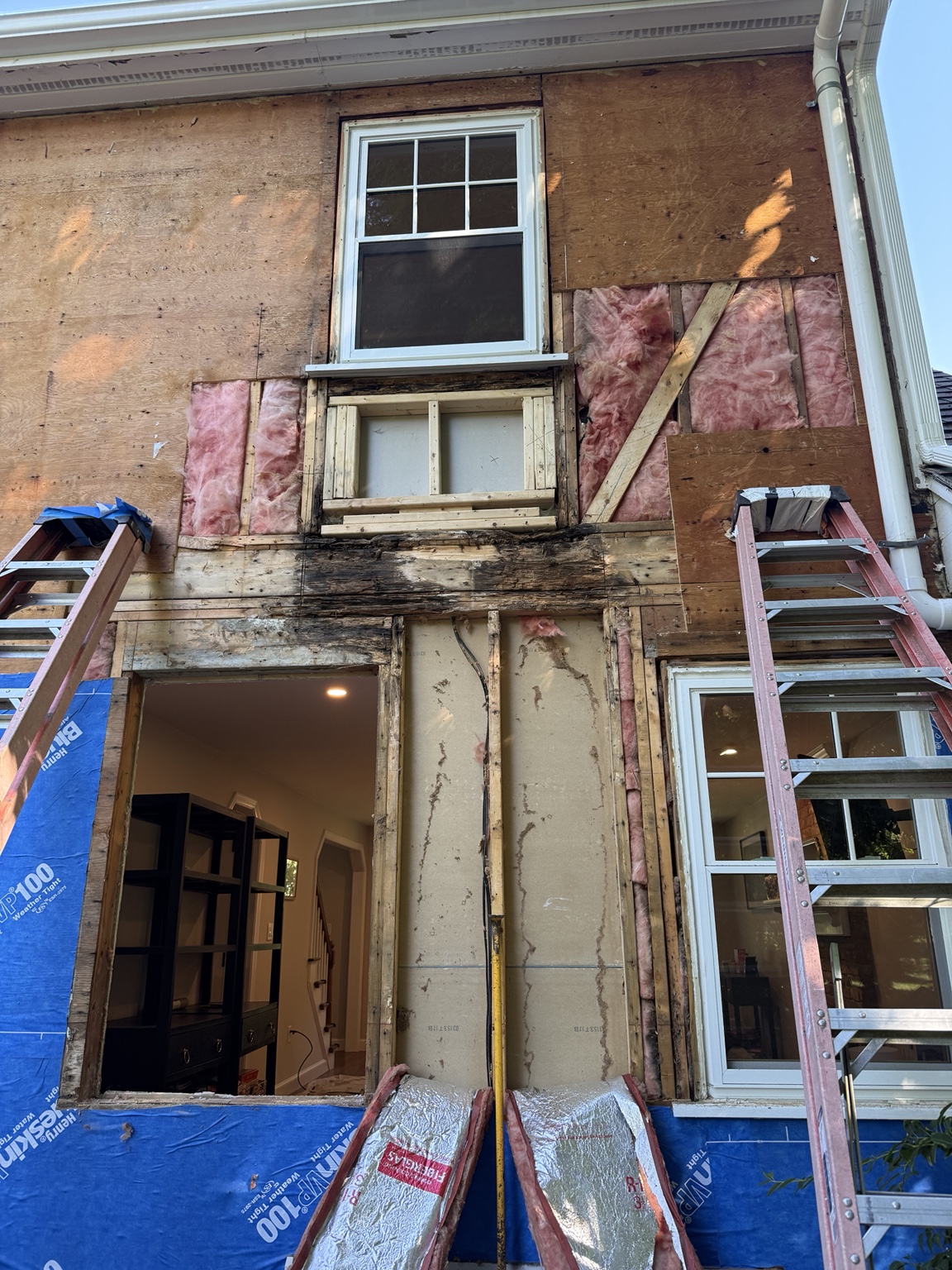
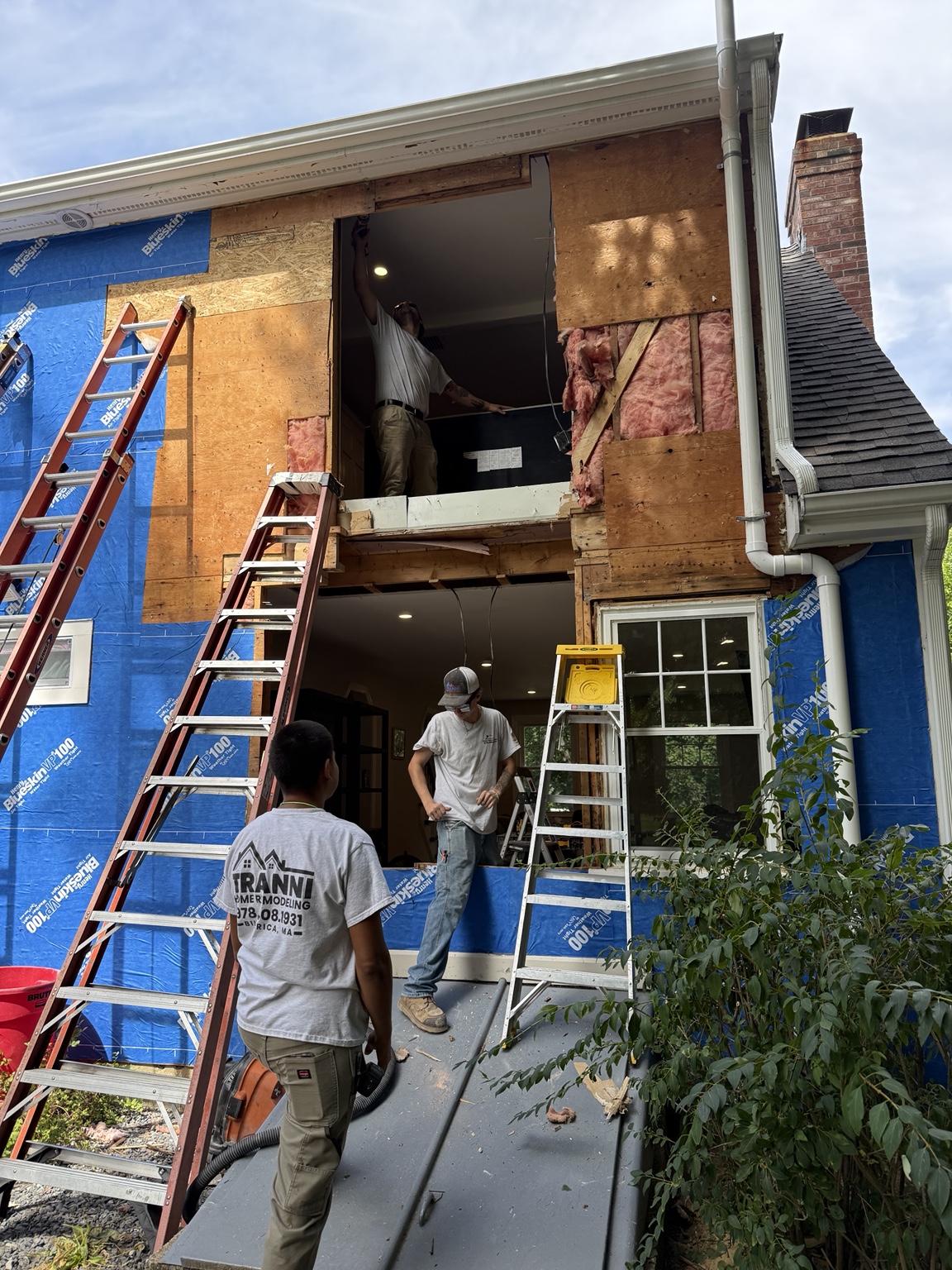
Bedford, MA · Project photos supplied by Tyler Tranni / Tranni Home Remodeling LLC.
Know what “replacement” actually means
Insert or pocket replacement: a new window assembly fits inside the retained frame after the old sashes and other required components are removed. Much of the existing trim and surrounding finishes can stay. [7]
Full-frame replacement: the existing window and its frame are removed back to the rough opening in the wall. This gives the installer access to assess the opening and address the connection between the new window and the house. [8]
“New-construction window” commonly describes a full-frame unit with a nailing flange. Full-frame replacement can also use a suitable flangeless unit. The important question is which parts will be removed, inspected, repaired, and sealed—not just the name on the quote. [1]
The lower price may cover a smaller job
Insert installations often cost less because they preserve more of the existing opening and finishes. Full-frame work is more intrusive and can involve additional carpentry, siding, trim, and finish repairs. Two prices may therefore represent substantially different scopes. [2] [4]
The future-cost concern is conditional: if a deteriorated sill, failed water detail, or damaged surrounding material remains, buying a new insert does not resolve that condition. A later repair may require opening finishes and disturbing work that was recently completed.
That is the risk Tyler wants homeowners to weigh. An upfront saving can be useful when the retained materials are suitable. It becomes a questionable saving when the lower price depends on leaving a necessary repair outside the scope. Ask the contractor to explain what remains and why it is reasonable to keep it.
Insulation is about the opening as well as the glass
A better window product can improve thermal performance, but gaps around the old frame may still let air through. Older installations can lack effective air sealing at the rough opening or have uninsulated cavities. An insert-only quote should explain how those conditions will be assessed and which gaps will actually be reached. [2]
A properly planned insert installation can include sealing and insulating accessible voids and, where present, old sash-weight pockets. Retaining a wood frame does not automatically mean poor insulation. The concern is leaving air leaks, insulation gaps, or deteriorated materials unaddressed. [3]
Use the NFRC label to compare the new window products. A lower U-factor indicates less heat transfer through the rated unit. The product rating should be considered alongside the installation scope; it does not establish the condition of the old opening in your wall. [6]
What a complete installation should address
With full-frame replacement, the proposal should explain how the exposed opening will be made ready for the new unit. Removing the frame creates access; the quality of the preparation and installation determines the result. [8]
- Assessment and repair of deteriorated materials around the opening.
- A sill flashing or drainage detail that directs water outward.
- Integration of the window flashing with the wall’s water-control layer.
- Insulation and an appropriate air seal between the unit and the opening.
- Shimming, fastening, and sealing to the selected manufacturer’s instructions.
- Restoration of the affected trim, siding, and interior finishes.
The photographs below show later stages of the Bedford repair: replacement framing and the wall re-covered with a water-resistive barrier before exterior finishes. They document the scale of the work. Ask for your own project’s concealed-work photos before the opening is covered.
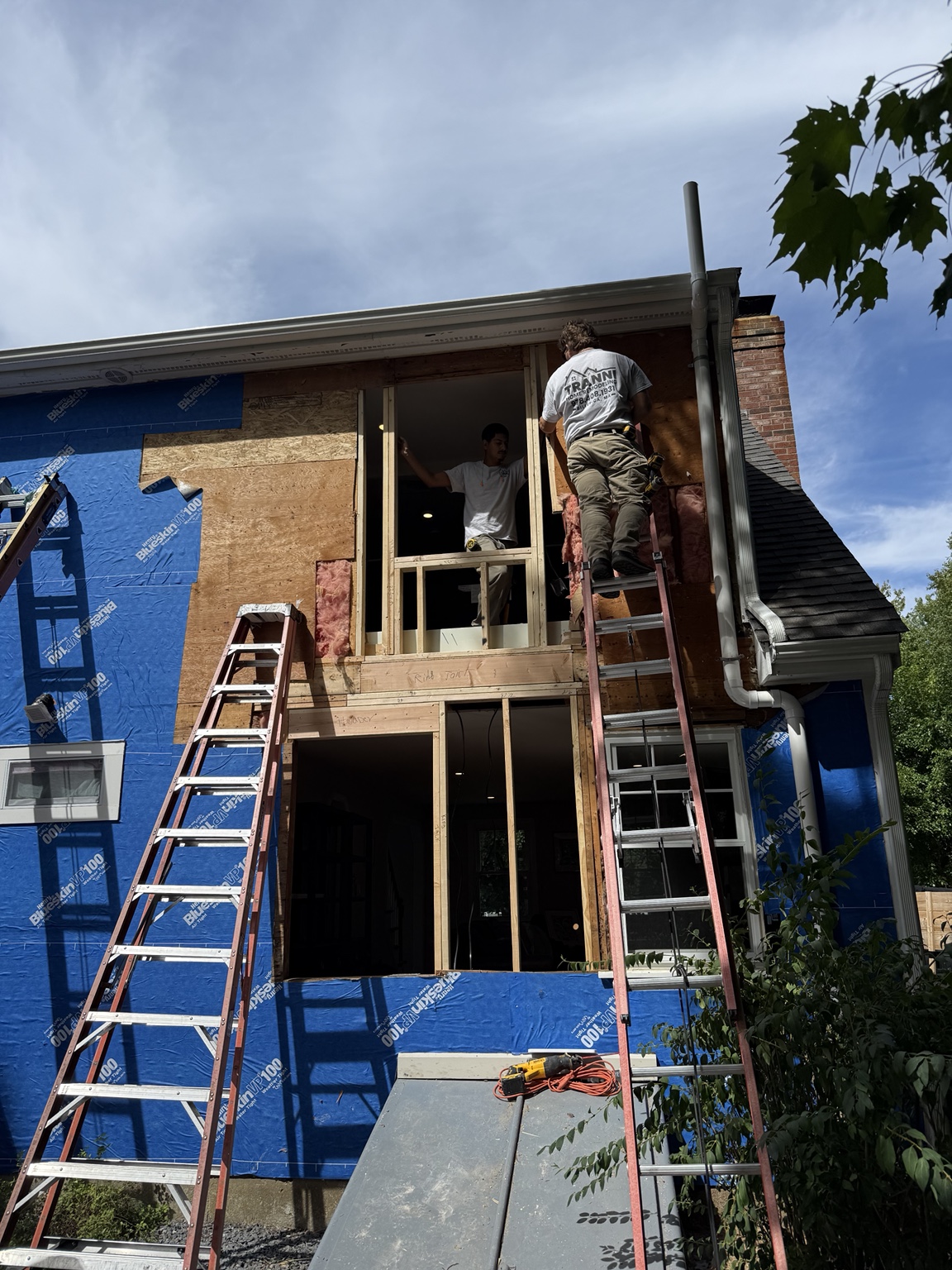
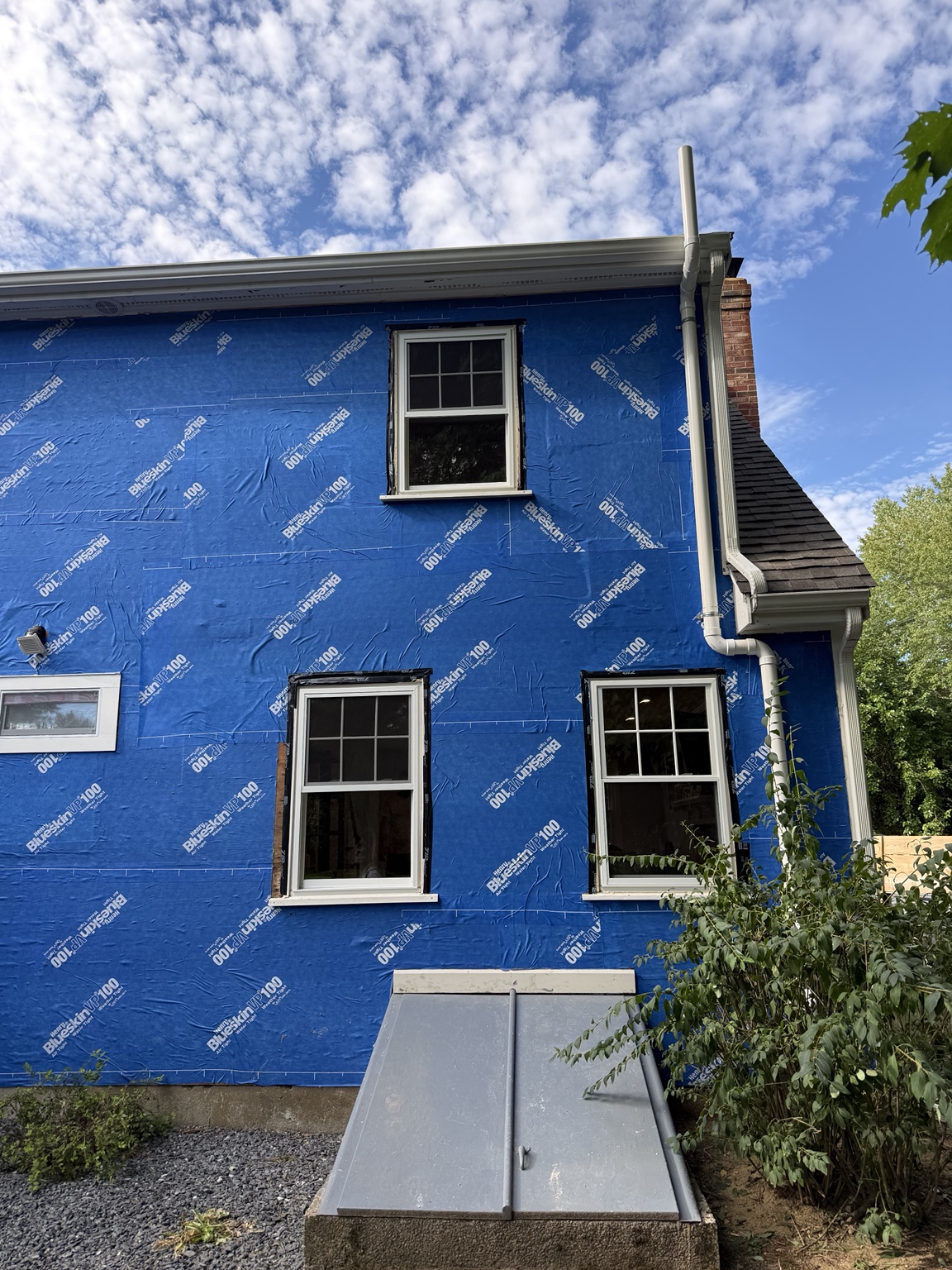
Bedford, MA · Project photos supplied by Tyler Tranni / Tranni Home Remodeling LLC.
When the less invasive option makes sense
Inserts have real benefits. Preserving interior casing, siding, and other finishes can reduce disruption, and that may matter greatly in an occupied home. The retained sill and frame must be in suitable condition, and the unit must fit and be installed correctly. An insert can also reduce the glass area within the original opening. [5]
For wooden frames from the 1990s or earlier, Tyler recommends considering full-frame replacement before settling on inserts. Treat that age as a reason to investigate the existing details. The condition of the frame, the leak history, and the work needed determine the appropriate method; age by itself does not establish which repair the house needs.
Rot, recurring leakage, questionable sill condition, or an opening that cannot properly accept an insert are strong reasons to discuss a fuller repair. A contractor should be able to show why retaining the old frame is suitable for this particular house. [5]
Plan the budget around the work the house needs
Tyler’s recommendation is to establish the appropriate repair first, then decide how to fund and schedule it. If the windows are serviceable and the upgrade is elective, saving for a needed full-frame installation—or doing the most important openings in phases—may be more sensible than buying a smaller scope simply because it fits today’s budget.
An active leak or deteriorating opening needs timely assessment and a plan to control further damage. Holding off on a cosmetic or energy upgrade is different from leaving water entry untreated.
Compare removal, repairs, flashing, insulation, air sealing, and finish restoration alongside the window model and price. Neither installation method guarantees a particular lifespan or payback. The useful question is whether the proposal addresses the conditions that could shorten the life of the window and the wall around it.
Questions to ask
- Is your proposal for an insert or full-frame installation, and exactly which parts stay?
- What did you find at the old sill, frame, and surrounding wall that supports that choice?
- How will you investigate suspected leaks or concealed damage before ordering the windows?
- Which gaps and cavities will be insulated and air sealed, and how will you access them?
- How will flashing and drainage connect the new window to the wall’s water-control layer?
- What are the costs of each complete scope, including repairs and finish restoration?
- If full-frame work is needed, can we phase the project while addressing urgent problems first?
What to put in writing
Use these points to clarify the proposal for your specific house.
- The installation method, window model, and materials being retained.
- The findings, investigation allowance, and areas that remain inaccessible.
- Responsibility for damaged sill, framing, sheathing, or other concealed materials.
- Flashing, drainage, insulation, and air-sealing details appropriate to the opening.
- Trim, siding, interior finish repairs, permits where applicable, and cleanup.
- Written approval of additional work and photos before concealed repairs are covered.
Sources & context
This working draft was developed from Tyler Tranni’s observations about insert windows, full-frame replacement, insulation, project budgets, and the cost of repairing an unnoticed sill leak in Bedford, Massachusetts. The project description and photographs were supplied by Tyler. The resources below support the installation principles; the appropriate scope depends on the house and the selected products.
- [1] Andersen: New construction versus replacement windows
- [2] DOE / PNNL: Window replacement checklist
- [3] DOE / PNNL: Insert replacement window
- [4] DOE / PNNL: Complete window and frame replacement
- [5] NFRC: Insert and full window replacement options
- [6] NFRC: Understanding window ratings
- [7] Andersen: Insert window replacement installation
- [8] Andersen: Full-frame window replacement
A transparent connection. Know Your Walls is owned by Tyler Tranni, owner of Tranni Home Remodeling LLC in North Billerica. Use these questions with any contractor you choose.
Learn about Tranni Home Remodeling